
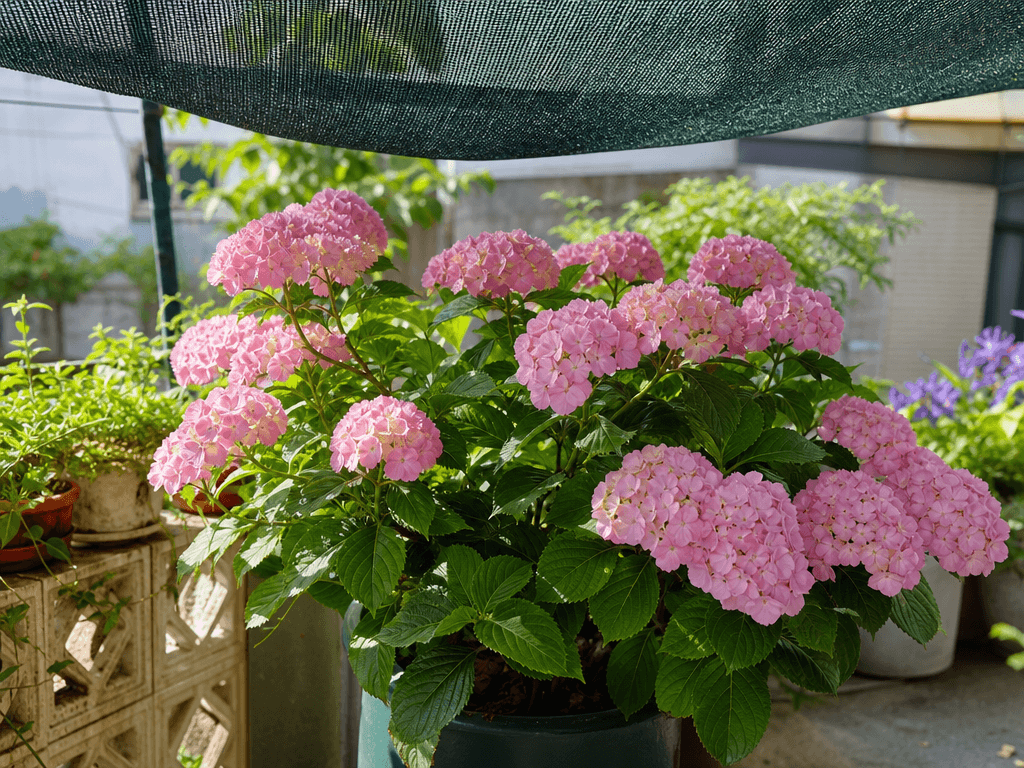
Summer brings high temperatures and intense sunlight, which can be challenging for hydrangeas—plants that naturally prefer partial shade. Many gardeners notice that their hydrangeas develop yellowing leaves, brown crispy edges, or wilted flowers during the hot months. Most of these problems are caused by direct sun exposure. One effective solution is using shade netting.
First, it prevents leaf sunburn. Hydrangea leaves are relatively thin and lose moisture quickly. When exposed to direct sunlight in temperatures above 30°C, they can develop burn marks within hours. In severe cases, entire leaves may dry out and fall off. Shade netting filters out most of the harsh sunlight, creating a gentler light environment and protecting the leaves from scorching.
Second, it keeps the foliage green and glossy. Intense summer light can break down chlorophyll in the leaves, causing them to turn pale, yellow, or even white. With moderate shade, chlorophyll levels increase significantly, making the leaves darker, thicker, and more lustrous. This greatly enhances the plant‘s overall appearance.
The first consideration is the shading rate. For most common garden hydrangeas, a shade netting with 50% to 70% shading rate is recommended. Around 60% is a good all-purpose choice—it blocks the fiercest midday sun while still allowing enough light for healthy growth.
Next is installation. Do not lay the netting directly on the plants, as this restricts airflow and can create a hot, humid environment that encourages disease. Instead, suspend the netting at least 50 centimeters above the plants to ensure proper air circulation.
Finally, consider the timing. The strongest sunlight typically occurs between 10 a.m. and 4 p.m., which is when shade is most needed. Morning and evening light are much gentler, so you can let your hydrangeas enjoy some direct sun during those hours to meet their photosynthesis needs.
First, avoid excessive shading. If the netting is too dense or left on all day, hydrangeas may become leggy—producing long, thin stems with widely spaced leaves and few or no flowers. To prevent this, make sure your plants receive at least 3 to 4 hours of gentle sunlight each day.
Second, different varieties have different needs. Bigleaf hydrangeas (such as Endless Summer) are more shade-tolerant and do well with around 60% shading. Panicle hydrangeas (such as Limelight) are relatively more sun-resistant and only need 30% to 40% shading. Too much shade can actually reduce flowering in panicle hydrangeas.
Summary In short, using shade netting for hydrangeas in summer is like giving them a protective umbrella. By choosing the right shading rate, installing it properly, and using it at the right times, you can help your hydrangeas not only survive the summer but thrive—with greener leaves and more beautiful flowers. For gardening enthusiasts, this small investment pays off with a whole season of healthy, vibrant plants.


Hello, I am the online customer service

