
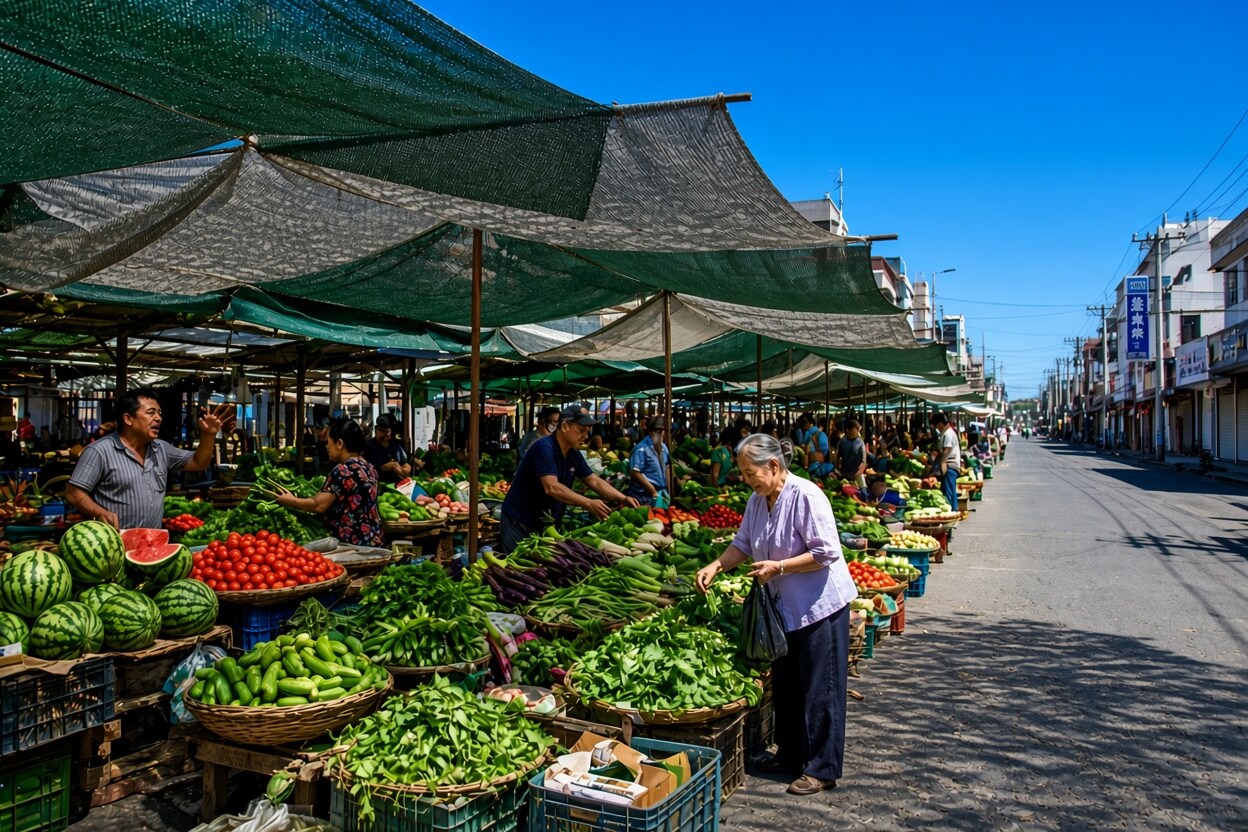
The sun is blazing. The pavement bricks are radiating heat. No one wants to linger in the direct sunlight for more than a second.
But in street markets across many cities, you'll notice something interesting—above fruit and vegetable stalls, dark green, black, or off-white nets are stretched out. Underneath, people are browsing leisurely. Vendors are greeting customers while arranging fresh produce.
A simple net. And the whole street feels different.
The net's job is straightforward.
It lowers the temperature. Sunlight passes through the mesh and gets filtered—harsh direct light turns into soft, diffused light. The surface temperature under the net can drop several degrees compared to the outside. Stand beneath it, and the difference is immediate: no longer surrounded by scorching heat, but comfortably cool enough to stay.
It protects the goods. Fresh produce suffers under direct sun. Without shade, greens wilt within hours. Fruit skins burn. Quality and taste decline. But under the net, everything stays in gentle light, staying fresh longer. Less waste means more reliable income for the vendor.
It keeps customers around. On hot streets, shade is an attraction. A shaded stall invites people to stop, browse slowly, and buy more. An unshaded spot? People just walk past—quickly. A net turns a "passing through" place into a "staying" place.
There are many ways to create shade—permanent awnings, umbrellas, solid canopies. But shade nets have their own advantages.
Low cost. Stretching a net is far cheaper than building a permanent structure. For most street vendors, it's an expense they can afford and are willing to make.
Breathability. Solid awnings trap heat underneath. Mesh, on the other hand, lets air flow freely. Shade without stuffiness—and that matters a lot in high heat.
Flexibility. Nets can be rolled up, adjusted in height, put up or taken down with the seasons. No permanent footprint, no blocked sidewalks.
Durable. A good-quality shade net lasts for years. Sun, rain, wind—it holds up.
Look closer, and you'll see the net's impact goes beyond the stall itself.
Markets feel livelier. A shaded street is simply more walkable, more comfortable. People stay longer. The whole atmosphere becomes warmer, more welcoming.
Neighbors connect. In many markets, adjacent stalls tie their nets together on shared poles. One vendor helps another secure a rope. A neighbor adjusts the height for someone else. A net pulls people closer.
Cities show their human side. When local authorities listen to vendors' needs and help them install shade facilities properly—rather than just tearing everything down—the entire street looks friendlier. That's real urban warmth. The kind found in everyday streets and daily life.
Shade netting isn't high-tech. It's not a grand invention.
It's just a piece of polyethylene fabric with holes in it. But this simple thing solves three problems at once—it protects goods, improves experiences, and keeps people connected.
As summers grow hotter, we often pin our hopes on air conditioning, massive cooling systems, and complex urban planning. But sometimes the best solution is right in front of us.
A net. A few poles. Stretched out to create shade.
Simple. Cheap. Effective. And that, perhaps, is the most beautiful thing about street-level wisdom.


Hello, I am the online customer service

