
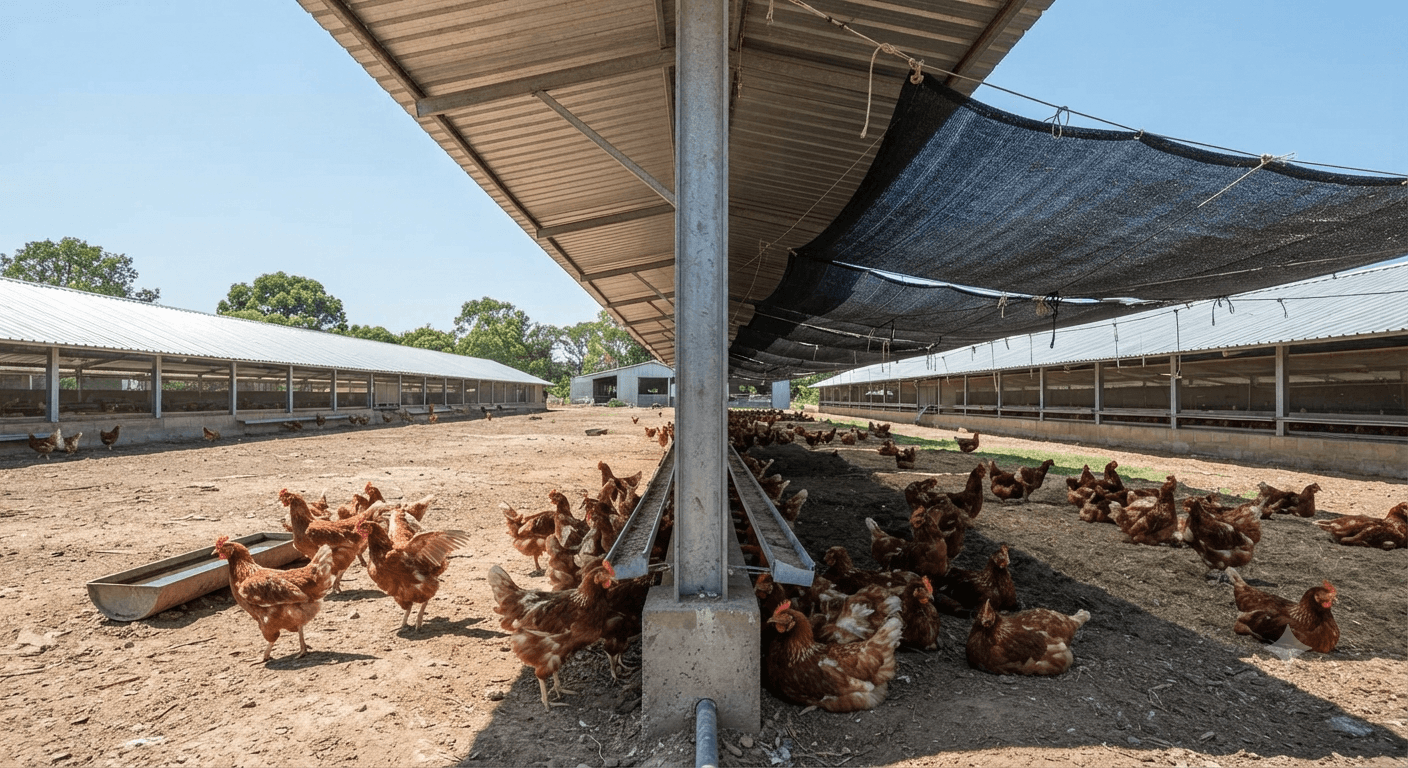
Summer heat is one of the biggest challenges in livestock and poultry farming. When temperatures exceed 30℃, animals show clear signs of heat stress—reduced feed intake, increased water consumption, slower growth, lower egg production in layers, and even heatstroke in severe cases. According to statistics, heat stress causes billions of yuan in annual economic losses to the animal farming industry. Shade nets are one of the simplest, most economical, and most effective tools for tackling this problem.
The core function of shade nets is to block solar radiation. When black or silver-gray nets are installed above animal shelters, they reflect or absorb most sunlight, greatly reducing the heat that reaches the interior. Field data shows that under the same conditions, shelters covered with shade nets can be 5-10℃ cooler than uncovered areas. At the same time, shade nets are breathable and do not block air circulation, preventing stuffiness. Leaving a ventilation gap of at least 50 centimeters between the net and the roof allows hot air to escape, further enhancing the cooling effect.
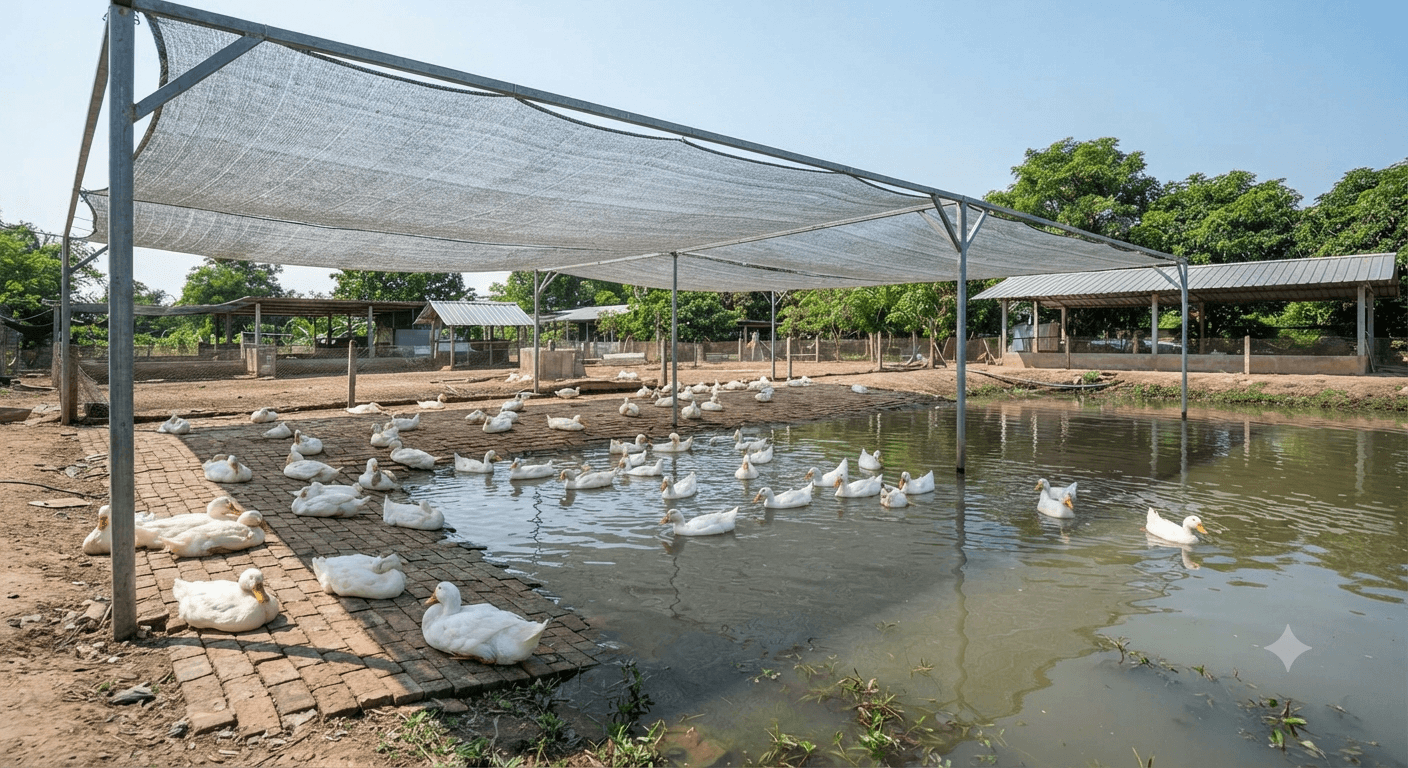
Shade nets have a wide range of applications in livestock and poultry farming. The most common use is installing them above poultry house roofs to protect flocks from direct sun exposure, especially for iron or asbestos sheet roofs that absorb intense heat and require a shade barrier. Another key application is shading exercise yards—installing shade nets over pig outdoor runs or duck/goat water-land activity areas creates a "man-made woodland" where animals can find refuge from the heat during the hottest hours. Additionally, hanging shade nets over doors and windows of animal shelters helps repel mosquitoes and other insects, reducing disease transmission.
The experience of a layer chicken farmer in Nanning, Guangxi, is particularly telling. His chicken house has an iron sheet roof, and midday summer temperatures often soared above 40℃, leaving the hens panting and egg production dropping from 93% to barely 70%. Last year, he installed a 75% shade rate black shade net 50 centimeters above the roof. The temperature under the net dropped to 31-32℃, and egg production remained steadily above 90% throughout the summer. This single improvement brought him tens of thousands of yuan in additional income. As he put it: "This net cost me less than two thousand yuan, and I recouped the investment within one summer—and still made a profit."
When choosing shade nets for animal shelters, a shade rate between 60% and 85% is recommended. Prioritize HDPE (high-density polyethylene) nets with added UV resistance, which can last 3-5 years. In terms of color, black provides the best cooling effect, while silver-gray is visually more refreshing and offers some insect-repelling benefits. During installation, be sure to leave adequate ventilation space between the net and the roof, keep the net tightly stretched, and secure it firmly to prevent wind damage. Rolling up the net after summer can further extend its service life.
In short, shade nets are cost-effective, easy to install, and highly effective—making them one of the most worthwhile practical technologies for combating summer heat stress in animal farming. A single net changes not just the temperature, but also the health of the animals and the profitability of the farm.


Hello, I am the online customer service

