
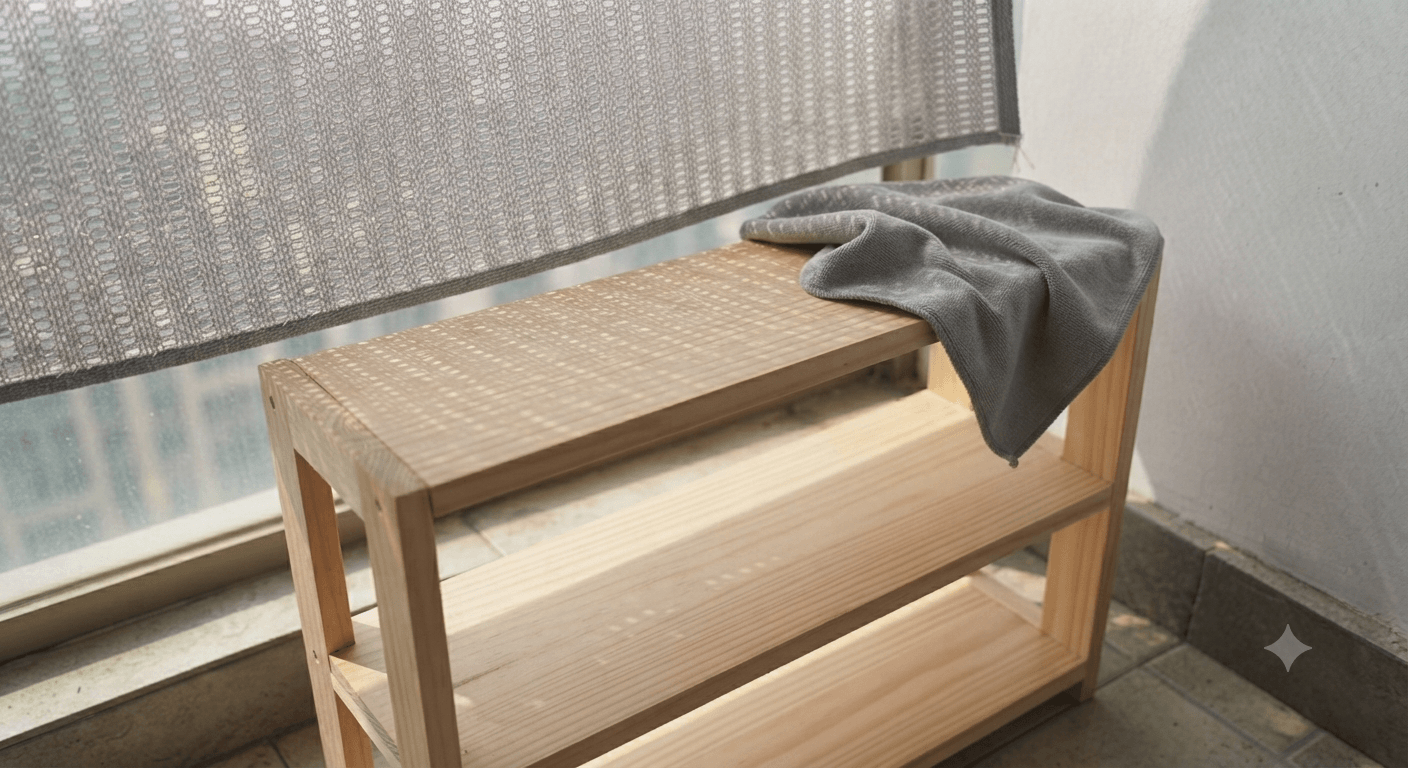
The balcony is the most direct connection between a home and nature, yet it also bears the brunt of wind and sun exposure. Many have had this experience: a newly purchased plastic flower pot shows whitish, brittle walls within less than a year, cracking at the slightest pressure; solid wood furniture develops uneven color patches as the varnish peels away; dark-colored clothing fades at the shoulders after repeated drying in the sun, becoming stiff and brittle. The root cause of all these problems is ultraviolet radiation in sunlight.
The damaging power of UV rays goes far beyond everyday awareness. UV does not simply lighten surface colors — its high-energy photons break the chemical bonds within polymer materials. In plastics, polymer chains fracture, resulting in surface chalking, loss of gloss, and reduced mechanical strength. In wood, UV degrades lignin, causing surface fibers to lose their binding cohesion, leading to cracking and fuzzing. In textiles, UV breaks the chromophores in dye molecules, causing irreversible fading while accelerating the oxidative breakdown of cellulose fibers, making fabrics brittle and rigid.
Shade netting is designed as a physical defense against these mechanisms. It relies on no chemical additives; instead, the woven flat filaments reflect, absorb, and scatter light, blocking the vast majority of UV radiation above the net. The light that reaches the balcony interior has had its harmful components drastically reduced, leaving only the visible spectrum for illumination and plant growth.
Consider a real-life comparison: two dark-colored plastic flower pots purchased at the same time — one placed in an uncovered corner of the balcony, the other positioned directly beneath shade netting. After two full summers of intense sun exposure, the former shows a distinct grayish-white chalky layer on its surface, with crumbling debris at the rim when lightly scratched. The latter remains fully saturated in color, with a smooth, crack-free wall that still feels resilient to the touch. The only difference between them is the layer of netting overhead.
This protective benefit extends well beyond flower pots. The varnish on wooden furniture stays intact, requiring fewer touch-ups and refinishing. Fabric cushions retain their vibrant color and soft texture without hardening. Daily-laundered clothing no longer fades prematurely at the shoulders and collars, and fabric strength is better preserved. Other items kept on the balcony similarly enjoy extended service life under shade netting.
From an economic standpoint, the cost of installing shade netting is modest, yet it can save considerable expense in replacement and repair costs for various balcony items. A single plastic pot, a wooden tabletop, or a cotton T-shirt may have limited individual value, but the total adds up to a real household expense. Shade netting keeps these items away from premature aging and failure, allowing every object on the balcony to serve its purpose for longer.


Hello, I am the online customer service

