
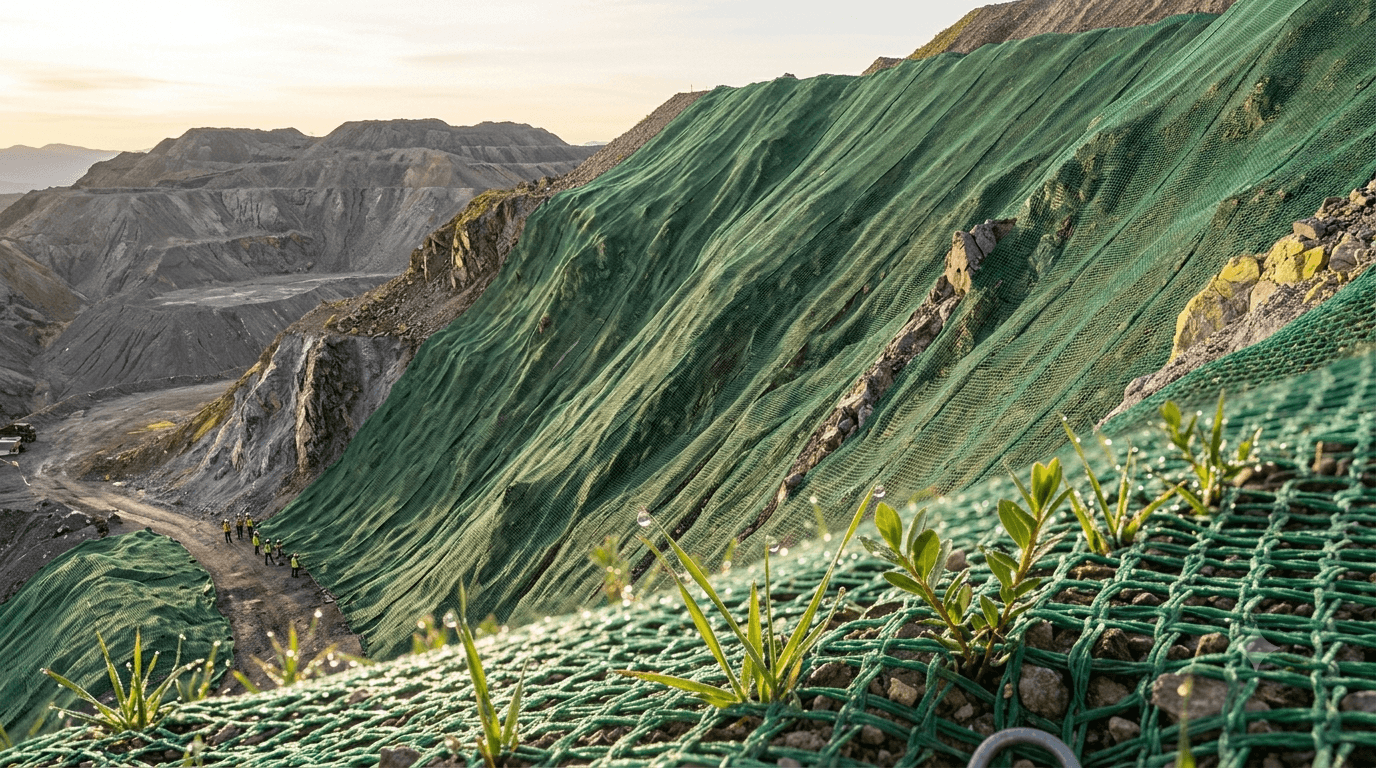
In open-pit mines, quarries, and tailings reservoir areas, long-term mining activities have left deep scars on the land. The hillsides, once covered with lush vegetation, have been stripped bare by blasting, excavation, and waste dumping. The original plant cover is completely removed, exposing rocks and debris directly to the air, creating large areas of steep slopes and loose piles of waste soil. During the rainy season, rainwater carries loose soil and stones down the slopes, carving deep gullies and causing severe erosion.
In the dry season, under the scorching sun, the surface temperature of the exposed slopes rises sharply, moisture evaporates rapidly, and the soil becomes dry and barren. Under such harsh conditions, plant seeds struggle to germinate, and even if they sprout, the seedlings are likely to die from drought, high temperatures, or erosion. The ecological restoration of mined areas faces extremely serious challenges.
Faced with such extremely degraded site conditions, traditional approaches such as direct seeding and afforestation often yield poor results. Green shade net has emerged as a low-cost, high-efficiency auxiliary restoration material and is increasingly used in mine re-greening projects. This netting, woven from polymer materials, is laid directly over the damaged slope surface and fastened with U-shaped pins or wooden pegs. Although simple in structure, it plays a vital role in ecological restoration.
Once installed, the shade net effectively blocks part of the direct sunlight, reduces surface temperature, and limits soil moisture evaporation, creating a relatively mild and humid micro-environment for seed germination and seedling growth. Moreover, when heavy rain strikes, the net disperses the impact force of raindrops, preventing the surface soil layer from being directly splashed and washed away, thus protecting the valuable soil and seed layers. More importantly, the green shade net not only provides "nanny-like" protection but is also deeply integrated into mainstream mine re-greening technologies.
In techniques such as external-soil spraying and straw mat laying, the shade net often serves as a key structural layer, placed over the seeds and growth medium to provide both stabilization and protection. After the seeds germinate and seedlings grow to a certain height, the net can be naturally degraded or removed. By then, patches of grasses and shrub seedlings have emerged on the once-barren slopes, and the mine begins to regain its green cover. It should be emphasized that the genuine green shade net is a functional auxiliary material. It is fundamentally different from the so-called "fake greening" seen in some places, where plastic imitation leaves are tied onto wire mesh to deceive inspectors. The shade net does not create green color directly; rather, it provides the necessary protection for real life to take root.
In short, the green shade net acts as an "ecological crutch," supporting fragile seedlings as they struggle to re-establish themselves on the damaged mine site. It is not an end in itself, but a bridge — helping the mine transition from a barren, lifeless state to a self-sustaining ecosystem. Though the net will eventually fade or be removed, the greenery it helped protect will continue to thrive on this once-wounded land for a long time to come.


Hello, I am the online customer service

