
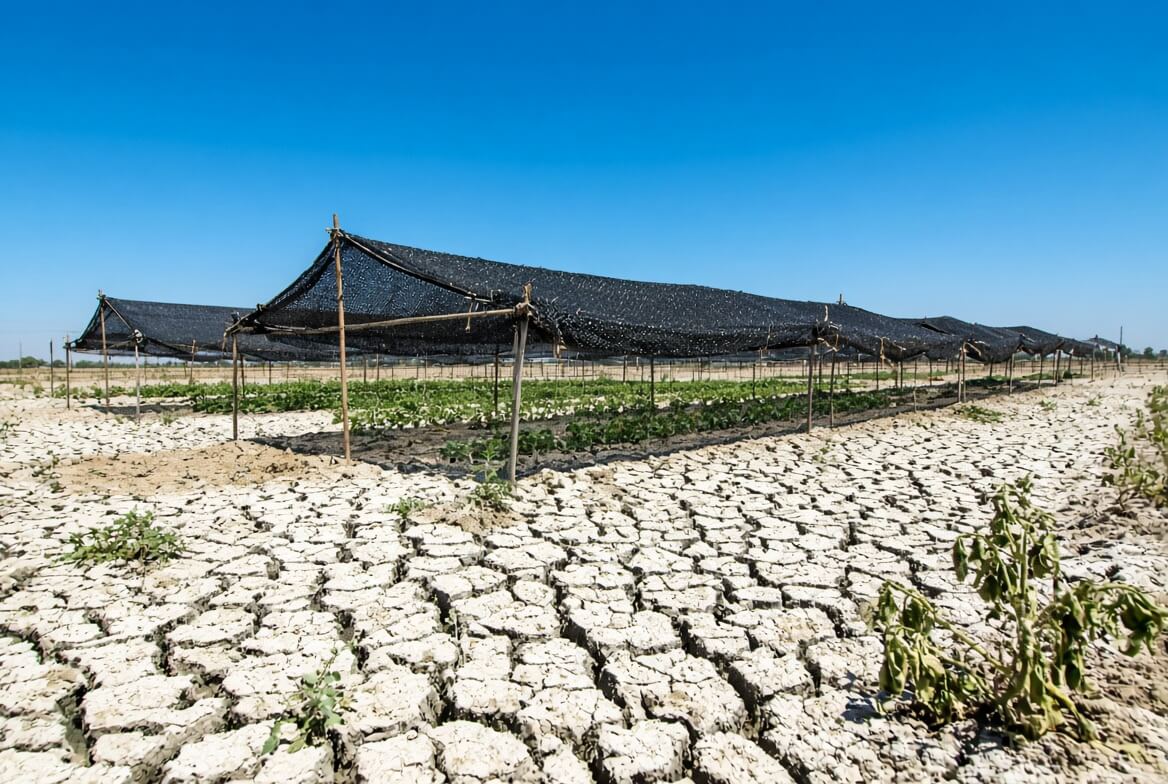
A very strong El Niño has been in place since September 2026 and is forecast to peak between November and January. For growers in Southern Africa, Central America, India, and Australia, that means below-average rainfall, above-average heat, and elevated risk of yield loss during establishment and flowering. In temperate regions, the same pattern brings more frequent cold snaps and sharper temperature swings through winter. Two different risks. One shared question: what can a low-cost physical barrier do before the season turns?
A shade net intercepts solar radiation before it reaches the leaf surface or the soil. Lower radiation means lower leaf temperature, and lower leaf temperature means less water lost through stomata. Trials on protected cultivation consistently show that shade screens reduce both radiation load and air velocity near the crop, which together lower reference evapotranspiration.
The practical result: more time between irrigation cycles. Not a replacement for water. A way to stretch what you have.
For nurseries and transplants, the effect is most pronounced. Young plants have shallow roots and almost no capacity to buffer heat stress. A 50–70% shade factor over propagation trays during the first one to two weeks after transplanting is standard practice, stepped down as roots harden off. In an El Niño year, that hardening-off window needs closer management, because the heat spike lasts for weeks, not days.
For open-field drought buffering, 30–50% is a reasonable starting point. Higher shading cuts radiation further but can limit photosynthesis in crops that still need to grow through the stress period. The right number depends on the crop, local radiation load, and whether the net stays up all season or only during peak weeks.
One thing worth saying plainly: shade netting complements irrigation and mulching. It does not replace them. Growers who combine all three get more from each than from any one alone.
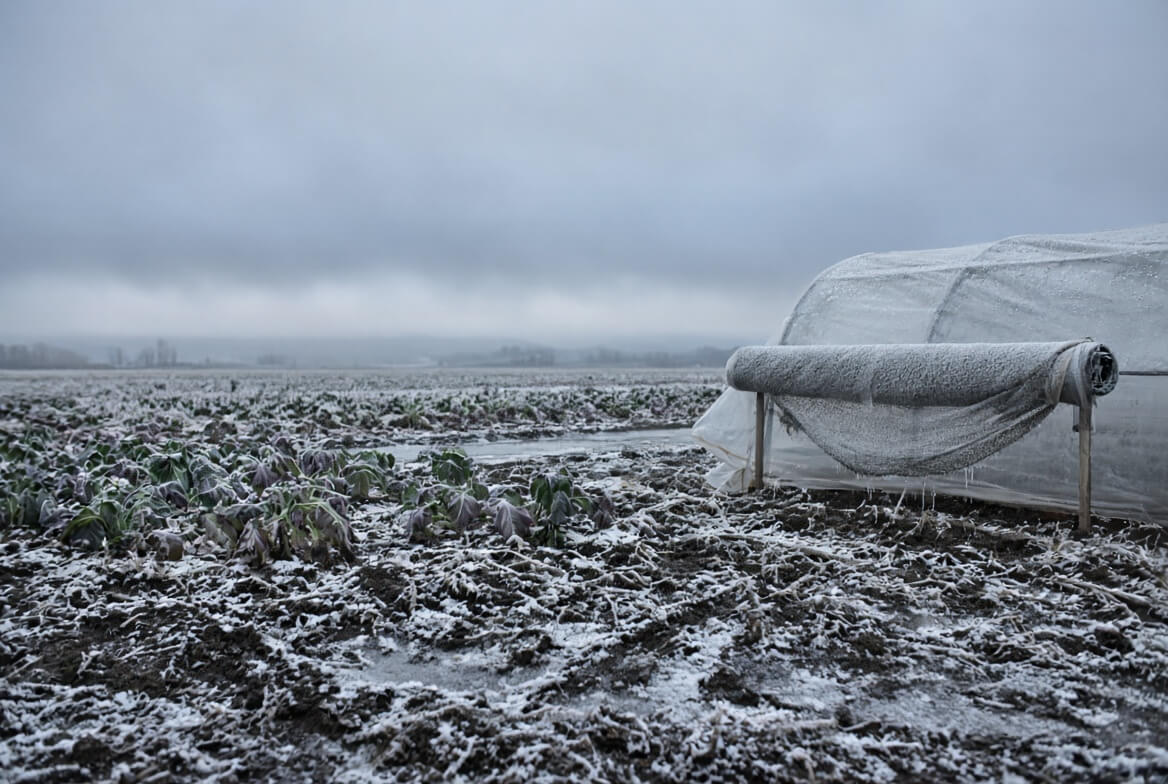
In temperate growing regions, the same El Niño pattern is linked to more frequent cold snaps and sharper temperature swings through winter. The damage is not just the absolute low. It is the freeze-thaw cycle that follows: frozen tissue and soil surfaces thaw too quickly under direct sun, and cell walls rupture from the sudden shift.
Shade netting does not generate heat. What it does is slow the rate of temperature change. After a frost, a layer of fabric reduces direct radiation on the crop, so the thaw proceeds more gradually. For open-field vegetables and overwintering nursery stock, that can be the difference between recovery and loss.
In protected cultivation, shade netting installed as an inner layer also reduces radiative heat loss at night — a small but real buffer against temperature drops. Growers in temperate zones who already use shade netting for summer protection are finding that the same material, left in place or redeployed after harvest, serves a second function in winter.
Not all shade net is built for a multi-season drought-and-cold cycle. Two factors matter most: the resin and the stabilizer package.
Virgin HDPE retains tensile strength far longer than recycled blends. A proper UV stabilizer package determines whether a net survives two or three summers of intense solar exposure, or goes brittle after one. If you are buying shade net as a defensive tool for both drought and cold-snap seasons, the calculation is not price per roll. It is cost per season of usable life.
Shade factor should match the job:
1.Open-field drought buffering: 30–50%
2.Nursery and transplant establishment: 50–70%
3.Post-cold-snap freeze-thaw buffering: 30–50%, enough to slow thaw without limiting light recovery.
The forecast is not a reason to panic. It is a reason to prepare. Growers in drought-affected regions should be thinking about moisture retention now, before peak heat arrives. Growers in temperate zones should be thinking about freeze-thaw protection before the first cold snap, not after.
Shade netting is one of the cheaper defensive tools available. It will not save a crop that is already failing. But with the right shade factor, correct installation, and multi-season durability, it can reduce losses in both drought and cold-snap conditions.
If you are unsure what fits your crop and region, send me your location and what you are growing. I will tell you what we would recommend — and what we would not. No obligation either way.


Hello, I am the online customer service

