
Mention shade netting and most people think of summer—blocking harsh sun, lowering greenhouse temperatures, preventing sunburn. So when winter arrives, it often gets rolled up and forgotten until the next hot season. In fact, shade netting is just as useful in winter; its role simply shifts from sun protection to frost protection and insulation. Understanding this lets one net deliver value twice a year instead of sitting idle for half of it. More importantly, winter use is completely different from summer use: in summer you stretch it tight, anchor it down and shade heavily; in winter you lay it loose, keep it breathable and leave gaps. Use the wrong method and you won't protect the crop—you may crush plants and trap disease.
Winter use isn't about generating heat. The net is laid over plants to slow ground heat loss and block cold wind, frost and snow from directly touching leaves. Frost forms on the net surface instead of damaging leaf tissue; wind is weakened by the mesh layer, keeping the microclimate around crops more stable. It works as a breathable buffer barrier, not a thick blanket. Precisely because it generates no heat, its warming effect is limited—its job is frost and wind buffering, not replacing a greenhouse. At night, heat escapes upward from the soil; the net layer keeps some of it near the surface and prevents cold air from flowing directly against the leaves. That is the basic logic behind its frost protection.
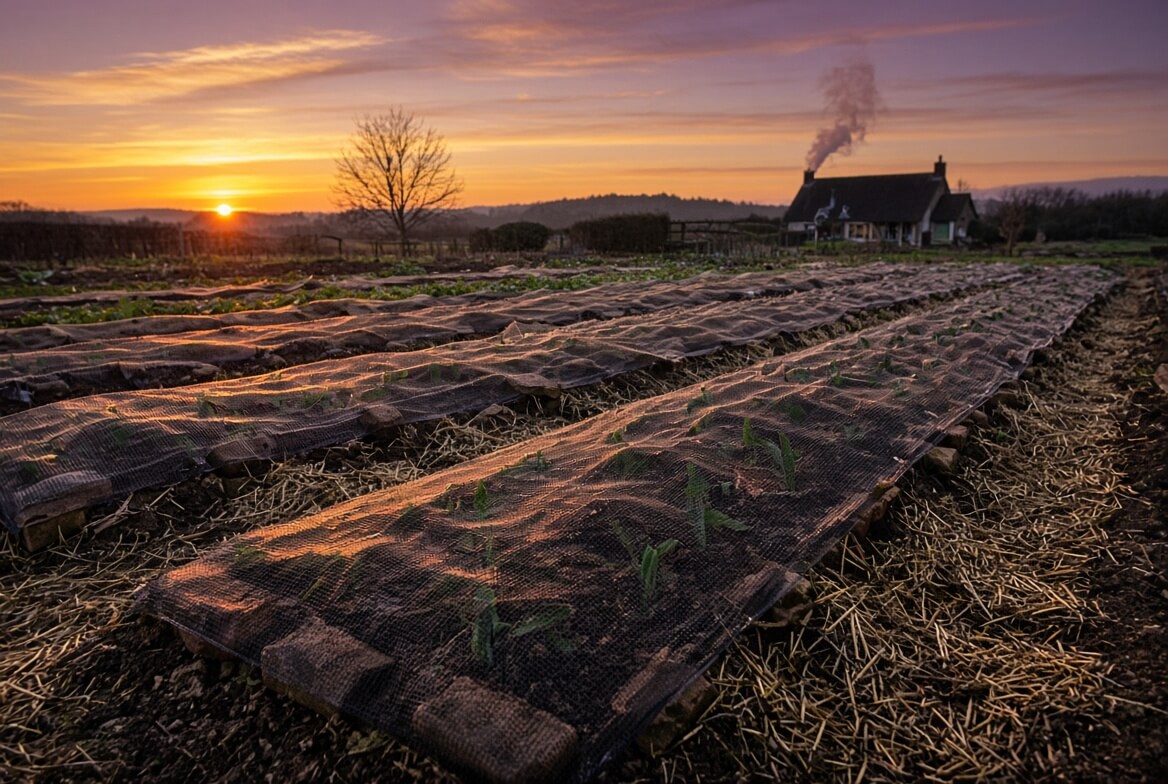
For home gardens and small plots, the most practical approach is floating cover—draping the net loosely over plants, weighted here and there with soil clods or bricks, letting it settle naturally around the plants without stretching tight or crushing leaves. This blocks frost and wind while leaving gaps for airflow. Trial data show that overwintering cabbage covered with shade netting suffered significantly less frost damage than open-field crops, with yield increases of 27.3% to 50.1%. The key is light and loose, not thick and heavy; a tightly stretched, fully anchored net can crush plants and block airflow. Timing matters too: cover before a cold wave or frost, uncover on warm sunny days to let crops breathe and see light, then re-cover in the evening. For mature leafy greens, leave some slack so the plants don't press against the net and freeze.
Shade nets commonly used for winter floating cover are light, around 45 g/m². The benefits: they don't crush seedlings, they breathe, they let some light through, and they don't yellow or rot the crop underneath. If you want extra protection, prioritize shading rate over gram weight—a higher shading rate (say 80–90%) is sufficient. Heavier nets may feel substantial but can crush plants and block too much light and air when used as floating cover. If only ordinary netting is on hand, the key is enclosure—leave an air layer between net and plants or frame, and seal the edges to prevent wind from carrying heat away. As for color, silver-grey nets are sometimes recommended for cold-hardy leafy greens, but don't over-trust color: shading rate and covering method matter far more.
Shade netting breathes better than plastic film. Leaves stay dry underneath, reducing disease—a major winter advantage. Plastic film insulates more strongly, but condensation forms on its inner surface, leaving leaves wet; low temperature plus high humidity invites disease. Still, shade netting shouldn't be left on indefinitely: once temperatures rise to a safe range, remove it promptly to prevent leggy growth or overheating. Roll it up on warm sunny days and re-cover before cold snaps—dynamic management is safer than leaving it sealed for weeks. After prolonged rain, check for standing water or rotting leaves under the net and clean them up to stop disease entering through wounds. During coverage, also watch for wind blowing the net loose or snow collapsing it, and reinforce it promptly.
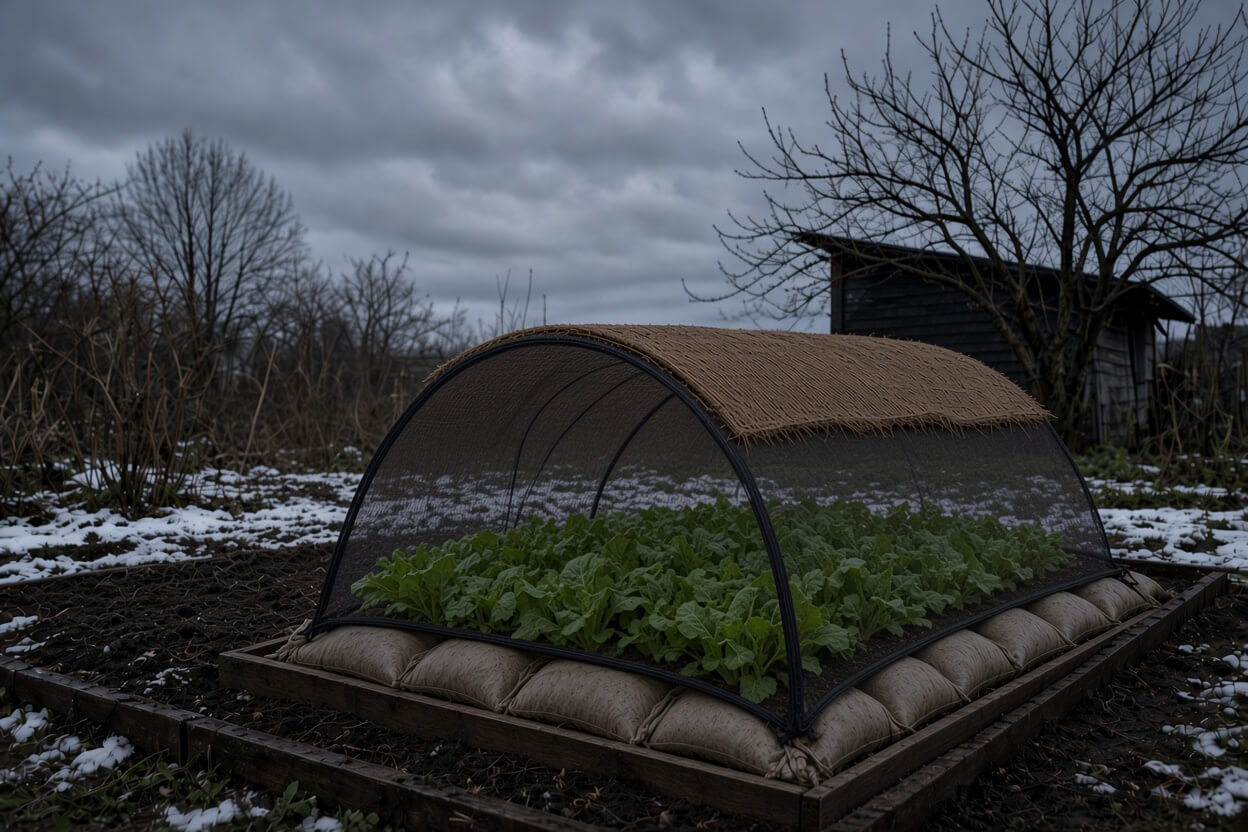
Be clear-eyed: a single layer of ordinary shade net typically raises nighttime temperature by only about 1–2°C. Its main role is frost and wind buffering. In extreme cold, one layer isn't enough—combine it with small hoop houses, straw mats or other covers for double protection. Treat it as a lightweight insulation layer, not a greenhouse substitute, and you won't be disappointed when a cold wave hits. If local winters stay below minus five degrees for long periods, shade netting is only an auxiliary; main insulation still depends on hoop houses, greenhouses or insulated blankets. Set expectations correctly and shade netting becomes a cheap, light, multi-purpose supplement in the winter garden.
Bringing out the summer shade net in winter isn't pointless. Choose the right type, lay it loose as floating cover, keep it breathable, remove and re-cover in time, add protection in extreme cold—do these, and one net shifts from sun protection to frost protection, safeguarding overwintering vegetables and flowers. A summer net can protect a winter garden; used well, it never sits idle. It's inexpensive, light and takes up little space—the key is not to use it with a summer mindset. Winter needs buffering, not sealing; breathability, not tight wrapping. Grasp that, and shade netting earns its place in winter.


Hello, I am the online customer service

