
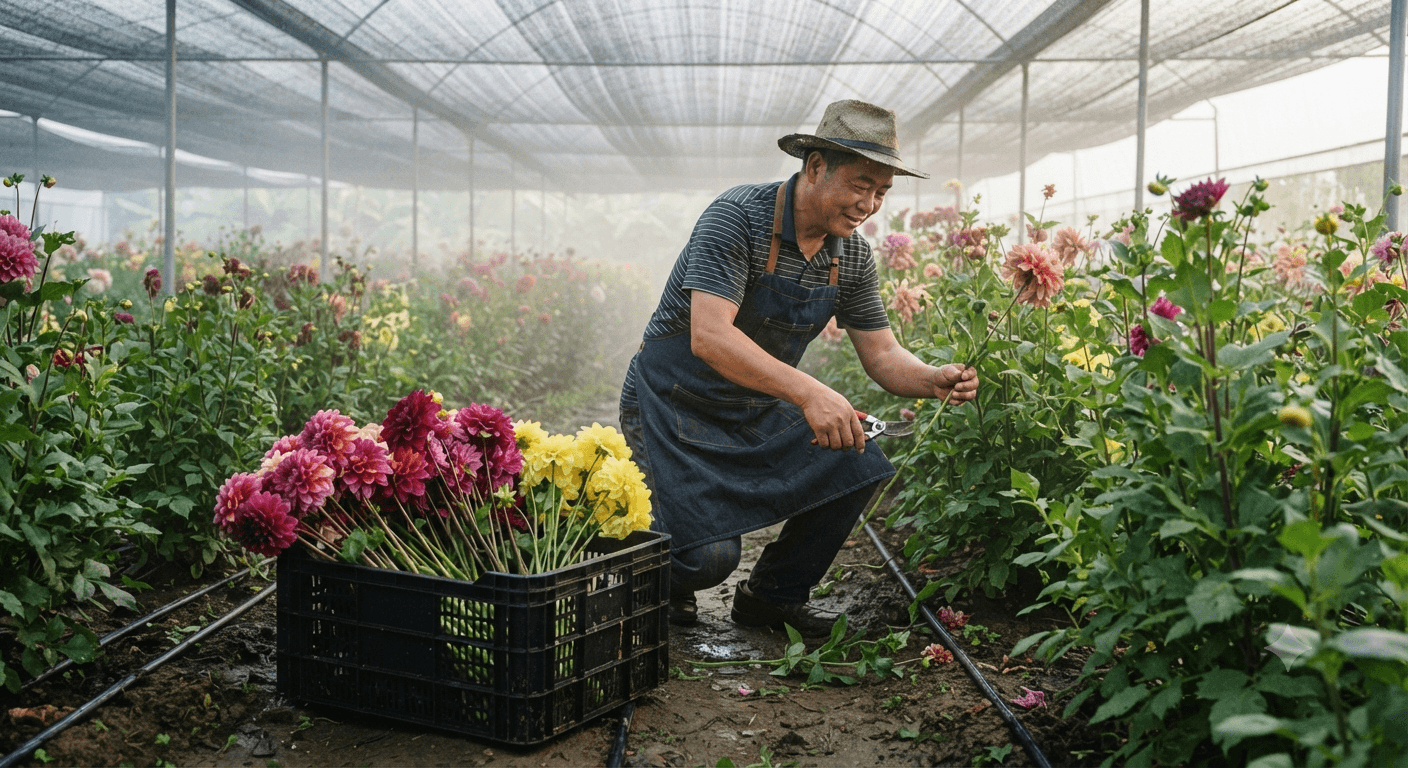
In regions with high temperatures and intense sunlight, flower growers often face a range of challenges including leaf scorch, disrupted flowering cycles, faded petal colors, and reduced marketable yields. Shade nets, as a low-cost and easy-to-implement environmental control tool, are being adopted by an increasing number of flower producers. They not only effectively improve the microclimate for flower growth but also enhance flower quality and productivity across multiple dimensions.
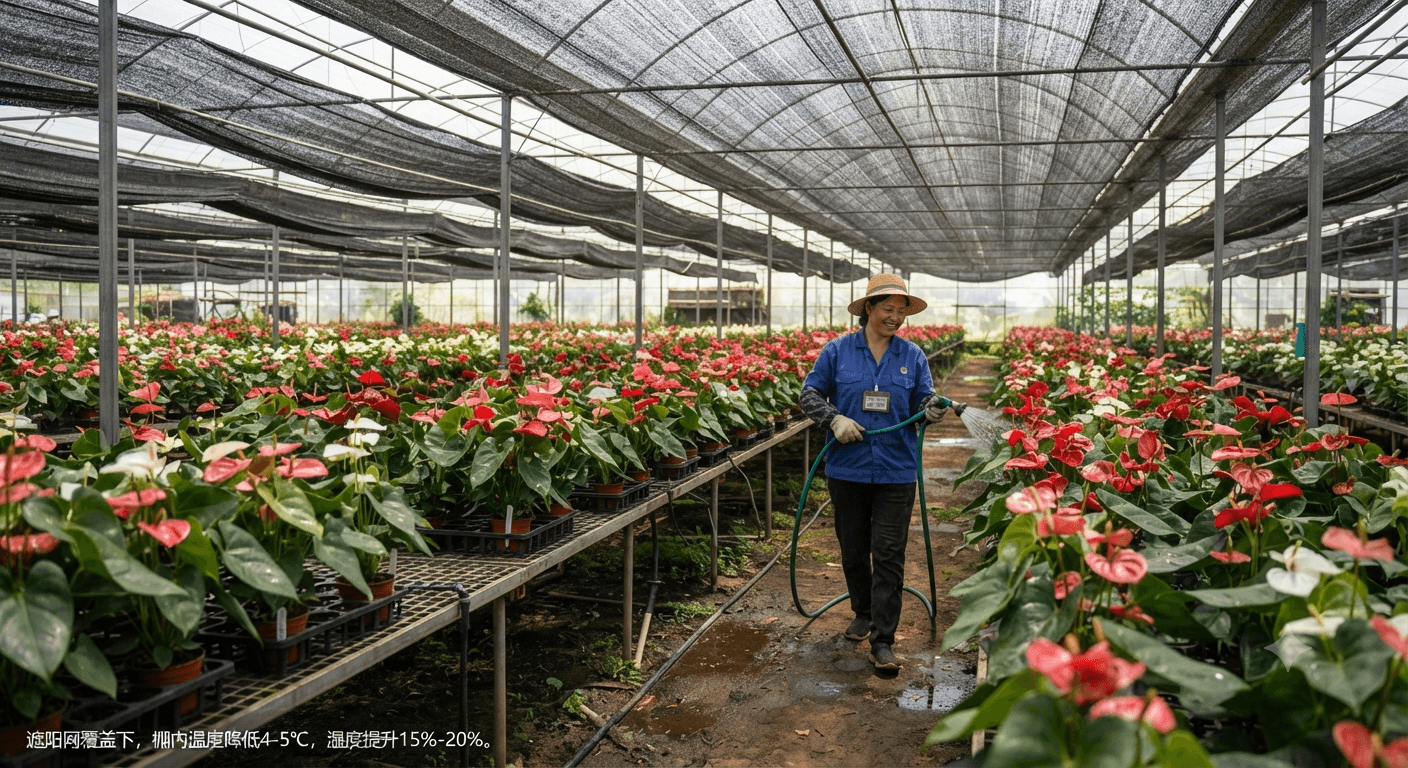
The primary function of shade nets lies in their regulation of light and temperature. By blocking a portion of solar radiation, shade nets significantly reduce light intensity in the growing area, preventing direct sunlight from scorching leaves and petals. Field data shows that with shade net coverage, surface temperature can drop by 9 to 12 degrees Celsius, air temperature decreases by 4 to 5 degrees Celsius, and relative humidity increases by 15% to 20%. This cooling and moisture-retaining effect is particularly pronounced during the dry season in tropical and subtropical regions. Furthermore, higher humidity slows down soil moisture evaporation, reducing irrigation frequency from once or twice daily to once every two days, thereby conserving substantial water and labor resources.
The contribution of shade nets to flower quality goes beyond simple protection—it also involves active regulation. Appropriate light intensity facilitates photosynthesis, resulting in darker, thicker leaves and stronger, more upright stems. Studies indicate that under shade net coverage, flower diameter can increase by more than 20%, petal coloration becomes more uniform and vibrant, stem length is extended, and flowering periods are more consistent and controllable. For cut flowers, these quality parameters directly determine product grade and market price. For potted flowers, shade nets encourage the development of lateral buds and branching, producing fuller, more rounded plant forms with greater visual appeal.
Beyond light and heat regulation, shade nets offer multiple physical protection benefits. During heavy rainfall seasons, they buffer the impact force of raindrops, preventing direct damage to seedlings and blooms while reducing soil compaction and the spread of root-borne diseases. In pest management, silver-gray shade nets have a repellent effect on aphids, helping to curb the transmission of viral diseases. Shade nets also deter birds from feeding on seeds and young plants, improving germination and survival rates. These protective functions collectively contribute to a significant reduction in production risks for flower growers.
Shade nets are available in a wide variety of types, with different colors and shading rates suited to different flower varieties and cultivation objectives. Black shade nets offer high shading rates and excellent cooling performance, making them ideal for midsummer use or for shade-tolerant foliage plant nurseries. Silver-gray shade nets provide moderate light transmission and aphid repellency, suitable for early summer and early autumn applications. In recent years, color-selective shade nets have gained popularity—red nets promote stem elongation, blue nets encourage lateral shoot development, and pearl nets enhance flower bud differentiation. Growers should select shade nets flexibly based on flower variety, growth stage, and seasonal changes to achieve precise management of light and heat resources.
In conclusion, shade nets provide reliable technical support for flower cultivation through their triple functions of light and heat regulation, quality enhancement, and physical protection. Against the backdrop of increasingly frequent extreme weather events and growing water scarcity, shade nets offer the advantages of low investment, rapid results, and simple operation, making them an indispensable production input in the ongoing transformation and upgrading of the floriculture industry. For flower growers in high-temperature, arid regions such as Africa, the appropriate application of shade net technology represents a vital pathway to stable production, quality improvement, and increased profitability.


Hello, I am the online customer service

