
Shade nets have become an essential auxiliary material in modern agriculture and horticulture. Their primary function is to regulate light intensity and ambient temperature through physical shading, creating optimal growing conditions for crops. However, shade nets with different shading rates vary significantly in practical performance, and selection should be based on specific use cases and actual needs. This guide categorizes shade nets into three tiers—low, medium-to-high, and high shading rates—to help readers systematically understand the characteristics and suitable applications of each category.
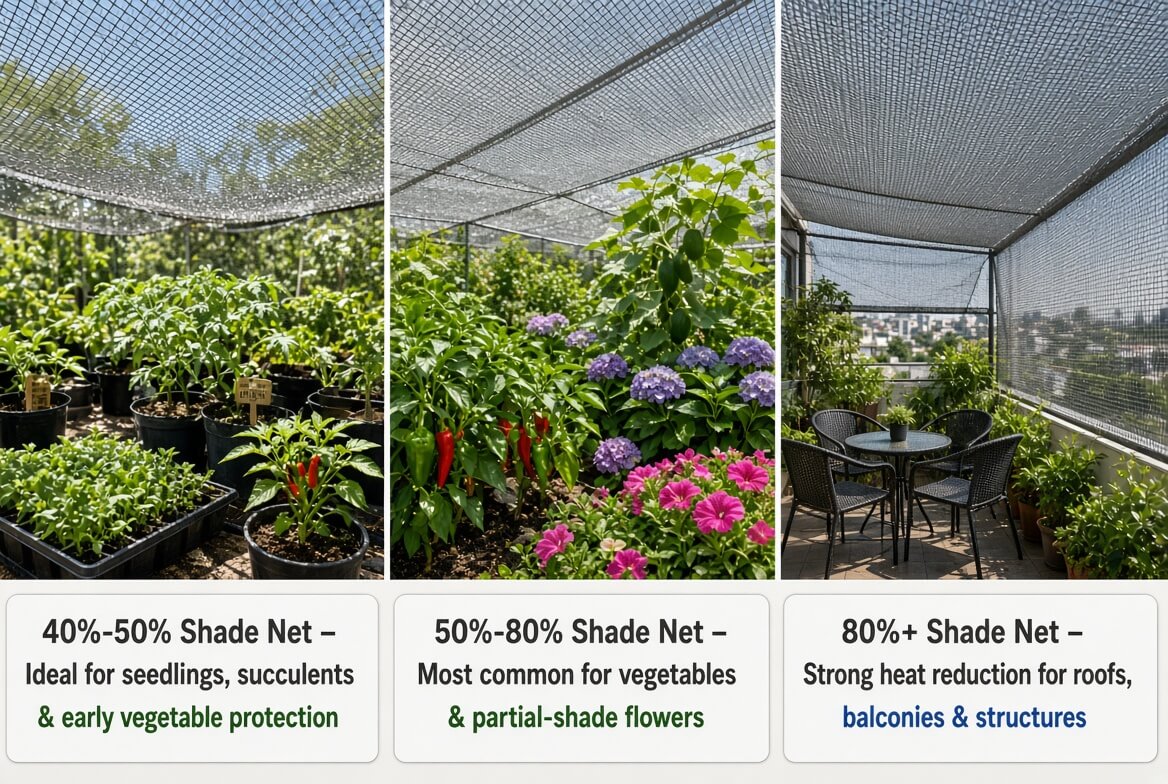
Shade nets with a shading rate between 40% and 50% feature larger mesh openings and a relatively loose weave, offering good light transmission and ventilation. Natural light can pass through the netting with sufficient intensity to support photosynthesis while moderately reducing excessive solar radiation during midday hours, protecting seedlings and sun-loving crops from sun scorch.
These nets are primarily used for light shading during seedling propagation, as well as for daily cultivation of sun-loving vegetables and flowers. Examples include the early growth stages of solanaceous crops such as tomatoes, peppers, and eggplants, as well as ornamental plants with high light requirements like succulents and petunias. Low-shading nets in black also provide an auxiliary effect of repelling aphids, which is particularly useful during the pest-active period from late spring to early summer. When ambient temperatures do not exceed 30°C, coverage is typically needed only between 11:00 a.m. and 3:00 p.m., with the net removed at other times to ensure adequate light exposure.
Shade nets with shading rates between 50% and 80% have increasingly dense weaves and offer significantly enhanced shading performance. This range represents the most widely used and versatile category in agricultural production and horticultural cultivation, striking an effective balance between sun protection and ventilation.
In vegetable farming, nets with a 50%-70% shading rate are suitable for summer cultivation of common crops such as peppers, cucumbers, beans, and lettuce. They effectively reduce ground surface temperature and leaf transpiration, minimizing water loss while preventing strong light from inhibiting normal crop growth. For semi-shade or shade-loving ornamentals such as hydrangeas, orchids, and azaleas, this range provides appropriate light conditions that promote vibrant flower colors and extended blooming periods.
In practice, when using products with relatively lower shading rates (e.g., around 50%), growers can enhance air circulation within the greenhouse by spacing the net panels 30 to 50 centimeters apart, further improving ventilation. This shading range is also commonly used for constructing simple shade structures and garden trellises, serving both functional and aesthetic purposes.
Shade nets with a shading rate exceeding 80% feature extremely fine mesh and a tight weave, providing exceptional blockage of infrared heat radiation from sunlight. When installed over rooftops, terraces, balconies, or carports, they effectively reduce temperatures in the shaded areas, lower air conditioning energy consumption, and create cool and comfortable shelter for living spaces and parked vehicles.
However, the strong shading effect of high-shading nets comes with notable limitations. Due to the fine mesh and poor air permeability, the covered area suffers from restricted airflow and tends to accumulate moisture. When used for plant cultivation over extended periods, crops will experience insufficient light, leading to leggy growth, weak stems, and reduced disease resistance. Additionally, high-shading nets have a large wind-catching surface area and pose a risk of being blown away or causing structural damage during strong winds if not properly secured. Therefore, such products are generally not recommended for agricultural cultivation or flower care. Their primary application should focus on external shading for buildings and heat insulation for outdoor leisure areas, rather than plant-growing purposes.
In summary, choosing a shade net should not simply pursue the highest shading rate possible. Instead, decisions should be made based on actual usage requirements. Choose low-shading nets for seedling propagation, medium-to-high shading nets for vegetable and flower cultivation, and high-shading nets for rooftop and carport cooling. Only by selecting the right product can you fully realize the value and effectiveness of shade nets.


Hello, I am the online customer service

