
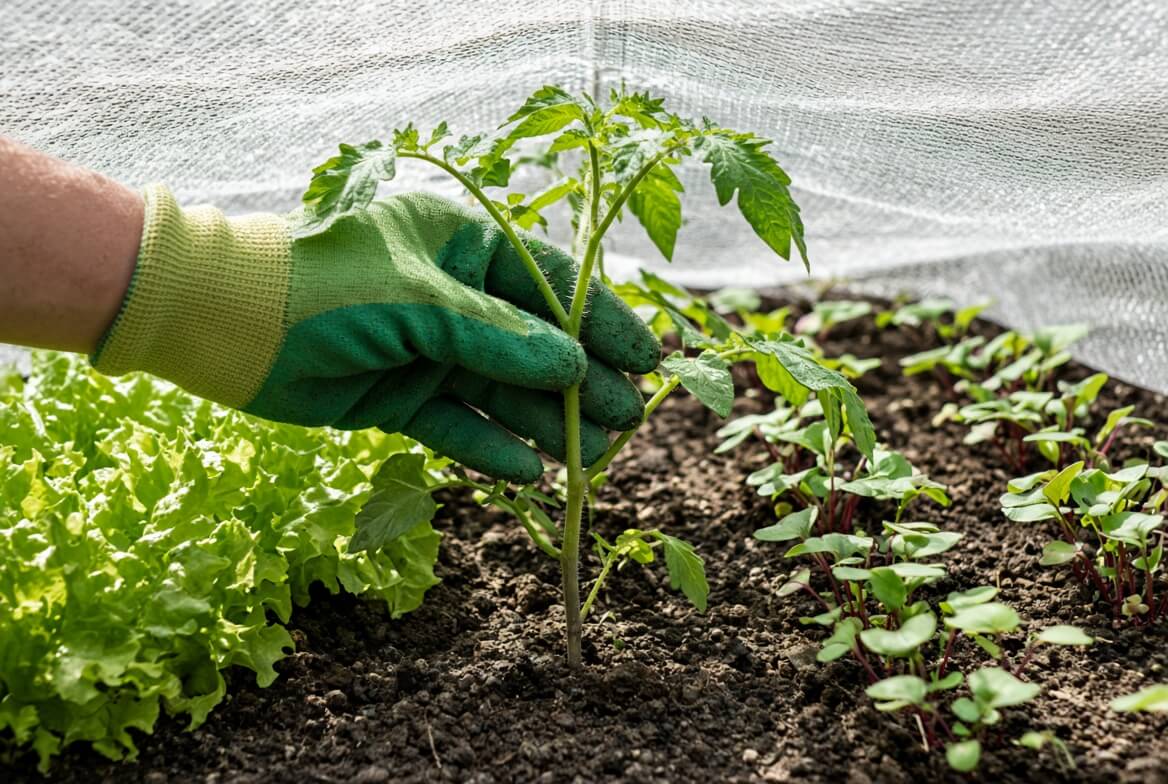
In modern agricultural production, pests and diseases remain one of the key factors limiting improvements in crop yield and quality. Although traditional chemical pesticides act quickly, long-term and heavy use often leads to increased pest resistance, excessive pesticide residues, soil and water pollution, and disruption of the agricultural ecosystem balance. As requirements for food safety and environmental protection continue to rise, physical control technologies are receiving growing attention. Shade nets, as a simple-to-operate and stable physical control material, are playing an increasingly important role in green agriculture and protected cultivation.
The core function of shade nets is to form a physical barrier. When covered over crops, field arches, or greenhouse vents, they effectively prevent pests such as cabbage butterflies, aphids, whiteflies, leafminers, and diamondback moths from entering the planting area. Adult pests find it difficult to pass through the dense net surface to lay eggs or feed, thereby interrupting their reproductive chain. Extensive production practice shows that after proper use of shade nets, the incidence of Lepidopteran pests such as cabbage butterflies and diamondback moths can decrease by more than 90%, and damage from aphids and whiteflies is also significantly reduced, greatly lowering pest pressure in the field.
In addition to directly blocking pests, shade nets also perform outstandingly in preventing viral diseases. Many important vegetable viral diseases, such as tomato yellow leaf curl virus, are mainly transmitted by piercing-sucking insects like aphids and whiteflies. By keeping these vectors outside the net, the transmission pathway of viruses is cut off, reducing the incidence of viral diseases by approximately 80%. At the same time, shade nets provide moderate shading and cooling effects, which can alleviate the stress caused by strong light and high temperatures in summer, reduce pest and disease outbreaks triggered by unsuitable environments, and further enhance the crop’s own resistance.
Another major benefit of using shade nets is the substantial reduction in chemical pesticide applications. Once pest populations decline, farmers can spray less or even avoid insecticides throughout the entire growing season. This not only lowers production costs but also reduces the risk of pesticide residues, helping produce agricultural products that meet green food standards and improving market competitiveness. In addition, shade nets can buffer the direct impact of heavy rain on the soil, reduce soil compaction and mud contamination, maintain relatively stable field humidity, and create a more suitable growing environment for crops.
In practical application, correctly selecting the shading rate and color is key to achieving the best results. For general vegetable production, products with a moderate shading rate are commonly used, mainly in green and black. Green shade nets offer better light transmission and are suitable for crops with higher light requirements; black shade nets provide stronger shading and cooling effects and are more suitable for high-temperature seasons or light-sensitive leafy vegetables. When covering, all edges must be tightly sealed, and full-season closed management should be maintained as much as possible to prevent pests from entering through gaps. At the same time, regular field observation is needed to check whether the net surface is damaged, ensuring continuous protective effectiveness.
The promotion and use of shade nets not only improve the targeted control of pests and diseases but also promote the transformation of agricultural production toward green and low-carbon directions. They reduce dependence on chemical pesticides, lower agricultural non-point source pollution, protect natural enemies and soil microorganisms, and help maintain agricultural biodiversity. For both protected agriculture and open-field vegetable cultivation, shade nets have become one of the practical technologies for achieving cost savings, efficiency gains, and quality improvement.
In conclusion, shade nets effectively control pests and diseases through physical barrier methods while also providing shading, cooling, and environmental regulation functions. They represent an important technical measure for achieving green, efficient, and sustainable vegetable production. As residue-free agriculture and the production of safe vegetables continue to advance, shade nets will play an even broader and more significant role in future agricultural production.


Hello, I am the online customer service

