
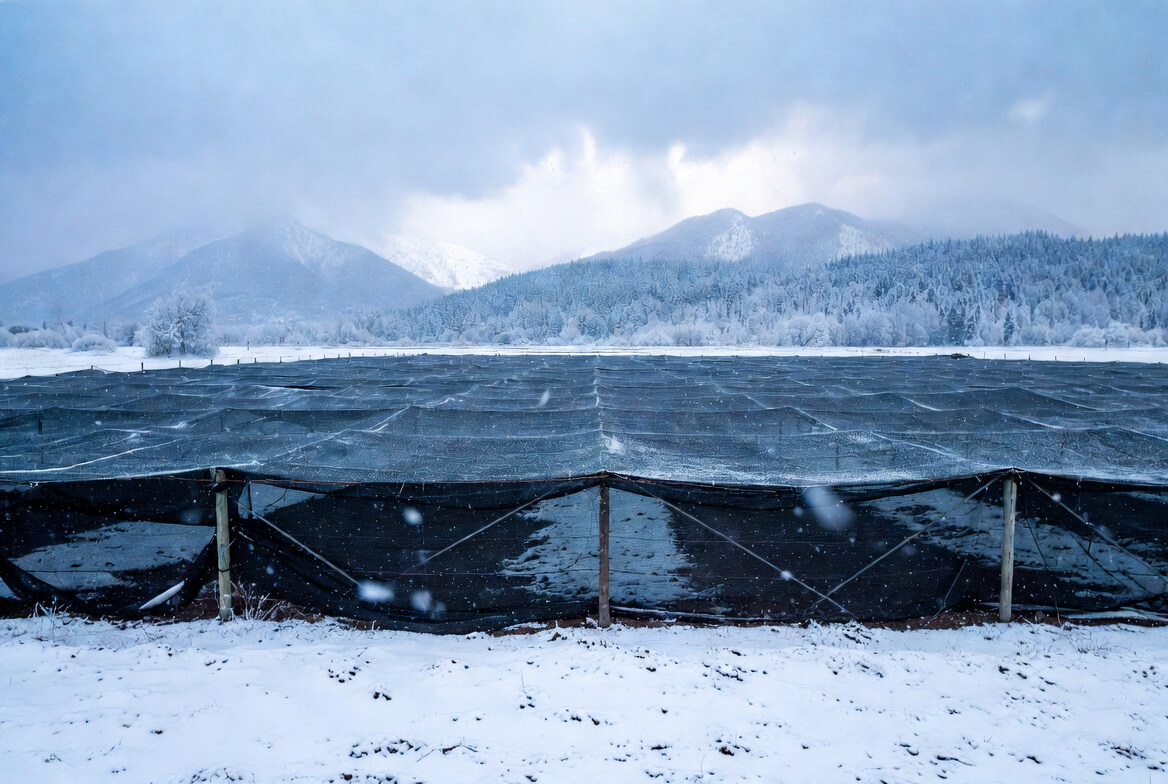
Shade nets, commonly used for summer sun protection, undergo a functional transformation in cold regions. In areas like Heilongjiang and Inner Mongolia, winter temperatures can drop below -30°C, causing frequent freeze damage to open-field crops. Shade nets slow soil heat loss and block cold winds, creating a stable microclimate for overwintering crops.
The insulation principle lies in intercepting long-wave radiation from the ground. During sunny days, soil absorbs heat; at night, the shade net reflects part of the radiation back to the ground or traps it in the air layer between the net and the surface. Studies show that shade net coverage can increase surface temperature by 2~5°C and soil temperature by 1~3°C—a seemingly small difference that can determine crop survival. Meanwhile, the net reduces wind speed and minimizes transpiration damage from cold winds.
Different crops require tailored coverage strategies. Leafy vegetables (spinach, cilantro) use a low-frame flat cover, with the net 10~15 cm above leaves to trap insulating air. Fruit seedlings and ornamentals are better suited for hoop-house cover, using bamboo or steel arches to support the net, preventing branch damage and creating a larger buffer zone. Install before the first frost and remove when temperatures rise in spring. For winter use, denser and thicker nets provide better air-trapping capacity.
Single-layer coverage has limited effect; combined strategies work better. Shade net + mulch film + straw in three layers can raise soil temperature by 4~6°C. Installing shade nets inside greenhouses as an inner insulation layer reduces nighttime heat loss by 20%~30%. Shade nets + straw windbreaks together significantly weaken cold wind impact on greenhouse structures. Multiple layers multiply the safety margin for overwintering.
The value of shade nets in overwintering goes beyond "freeze prevention": Economically, they reduce winter mortality and replanting costs, extend harvest periods by 20~30 days, and improve marketable yield by over 15%. Ecologically, shade nets are reusable for 3~5 years, outperforming single-use plastic films and reducing soil pollution. In terms of adoption, they are easy to operate, low-cost, and flexible—accessible even to smallholder farmers. This "low-input, high-return" technology is evolving from a supplementary tool to a core solution for overwintering management in cold-region agriculture.


Hello, I am the online customer service

